
Philip Explains Why Thinning Hair Can Look Worse + What You Can Do About It
Is brushing bad for thinning hair?
The right kind of brushing is actually therapeutic. When hair is thinning, your best tool is a natural boar bristle brush like my Paddle Brush. The soft bristles gently exfoliate the scalp, freeing up dead cells and debris, and pull your natural oils down the hair shaft to condition the strand from root to tip. Work in light, gentle strokes, always from the ends up. Be gentle, kind, and loving. That light contact also stimulates circulation and supports healthy cell turnover.

Can hair extensions make thinning hair worse?
The wrong type of extensions can be genuinely damaging to thinning hair. Bonded extensions, heavy clip-ins, certain fusion methods… all of these put mechanical stress right at the follicle. When follicles are already compromised, that repeated traction can push them further into a resting state or cause traction alopecia.
Instead of masking the problem with extensions, build real volume from within. Start with my Rejuvenating Oil, made with sheer plant and flower oils that sink into strands and plump them with moisture. Follow with my Peppermint Avocado Shampoo to build natural body at the roots. Before you blow-dry, work in my Russian Amber Imperial Mousse for incredible body and texture without that heavy, sticky feeling. Then use a curling or flat iron on a low setting to create soft waves, mist on some Jet Set Hairspray for a sexy, tousled finish, and pin your hair into a casual bun. Let it down just before you go out.
Why is scalp exfoliation so important for thinning hair?
Lack of scalp exfoliation is one people really underestimate. Like I always say, great hair comes from a greater scalp. If you’re not clearing away dead skin cells, sebum, sweat and product buildup, you’re clogging the environment your follicles need to thrive. A congested scalp is an underperforming scalp.
I recommend my Peppermint Avocado Scalp Scrub or Silicone Scalp Massager at every shampoo to keep things clear and circulation active, so active ingredients like Redensyl® in my Scalp Booster System can actually penetrate and reach the follicles. Redensyl® is clinically proven to improve the look of density, coverage and fullness, so you'll see less shedding in your hairbrush.*
*In a clinical trial of 26 male volunteers between 18-70 years old using Redensyl at 3% concentration, 71% of participants saw their hair take on a thicker look and feel after just three months of use.
Are anti-frizz products bad for thinning hair?
Anti-frizz products are only a problem when they rely on heavy, old-fashioned silicones that coat and weigh hair down. The smarter approach, especially for thinning hair, is my Weightless Conditioning Water. It’s made wtih a microfine, plant-derived silicone that’s a generation beyond what you’ll find in conventional frizz formulas. It seals the cuticle and controls humidity response without any heaviness or buildup. You can even mist it on throughout the day for a refresh.
To understand why this matters, picture your hair cuticle like overlapping roof shingles made of stacked protein plates. When those layers are raised — from heat, rough styling, or chemical processing — moisture rushes into the hair shaft, breaks down the hydrogen bonds in your keratin structure, and strands swell and twist. That’s when you see frizz.
The solution isn’t smothering your hair in silicones. It’s sealing the cuticle and managing moisture. Right after rinsing, before you reach for your towel, mist your hair with my Detangling Toning Mist — it seals the cuticle at the optimal 5.5 pH for that glass-like finish. Before blow-drying, layer on my Thermal Protection Spray to lock out humidity while adding controlled hydration and shine. Finish with Weightless Conditioning Water once your hair is dry.
Color and heat make withdrawals too, and my Rejuvenating Oil is how you replenish. Its plant and flower oils mimic natural scalp lipids, eradicating frizz and leaving hair elastic and vibrant without ever making it greasy. That’s the difference between thoughtful formulation and just coating your hair into submission.
Can tight hairstyles contribute to hair thinning?
Too-tight hairstyles are one of the more serious culprits on this list. Tight ponytails, braids, buns… these create traction alopecia, and it’s more common than people realize. Repeatedly stressing the follicle at the root shortens the anagen growth phase, and over time the follicle can scar and stop producing hair altogether. If thinning is a concern, wear your hair down or loosely styled as often as you can to give your follicles a rest.
How do hair color and heat styling affect thinning hair?
From a haircare standpoint, aggressive bleaching or overlapping color processes weaken and break the hair shaft, making thinning look dramatically worse even when the follicle is still healthy. I think of it like a bank account. You start with $1,000. Every bleach session is a $250 withdrawal. Color without bleach, $100. Each flat-iron pass costs $25, every blowout $10. The damage accumulates faster than most people realize. And what you take out, you have to put back.
Each of my Rejuvenating Oil treatments is like a $225 deposit. Used with my Peppermint Avocado Shampoo and a good conditioner, it restores elasticity, fullness and shine without weighing hair down. The more you take out of your hair, the more Rejuvenating Oil treatments you should work into your routine.
From an aesthetic standpoint, dark, flat, single-process color is the least forgiving on thinning hair. One uniform shade — especially a deep one — creates a stark contrast against your scalp, making sparse areas stand out.
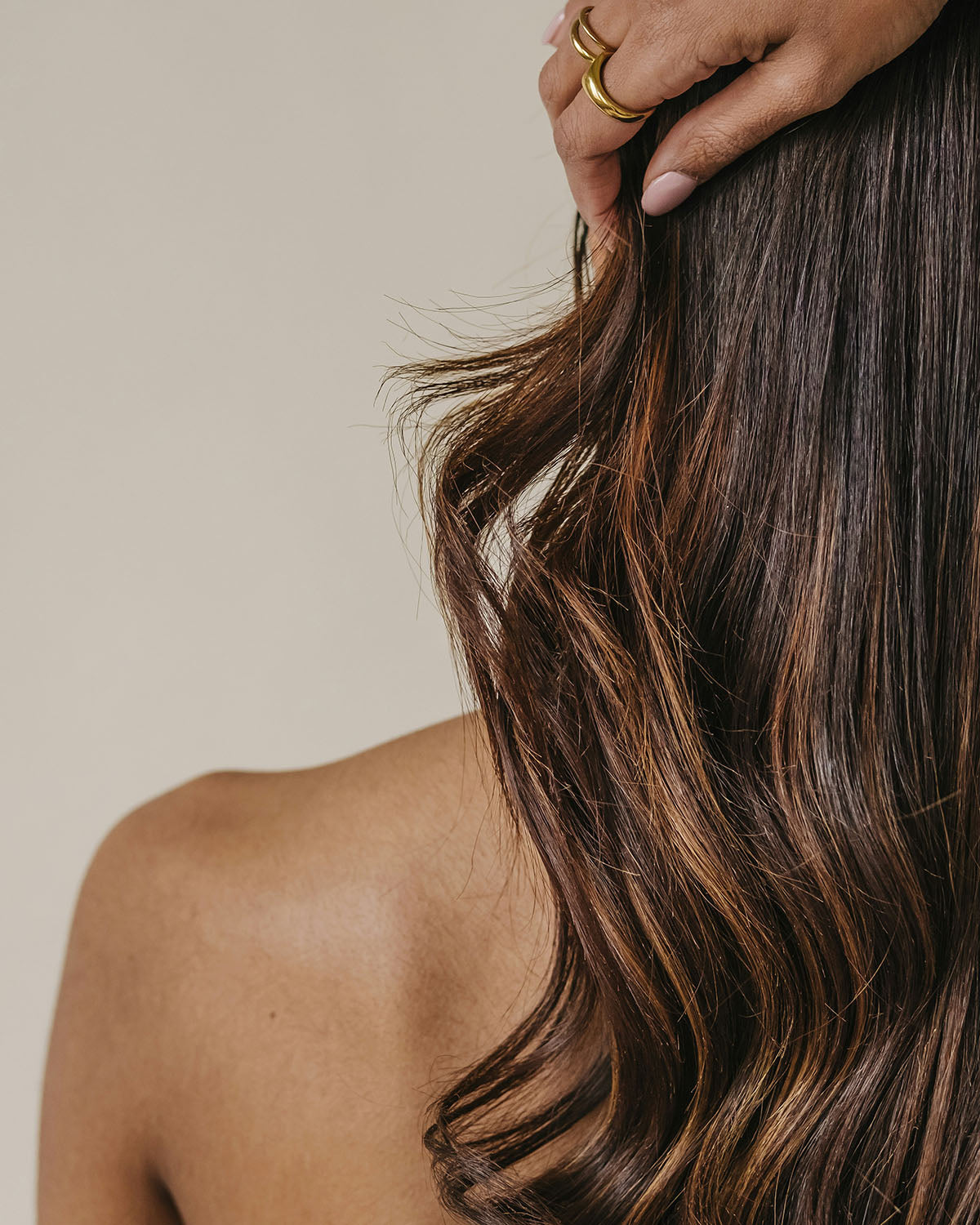
Lighter colors are more forgiving, but dimension is really the key. Highlights, balayage, shadow roots... anything that creates variation and movement throughout the hair will visually blur the line between hair and scalp so sparse areas look less obvious.
Where people go wrong is assuming they should go full platinum all over. A flat, very light color has the same problem as a flat dark one (no dimension = no camouflage). And the harsh bleaching required to get there compromises every strand, which brings us right back to those bank account withdrawals. The sweet spot is a mid-range base with lighter pieces woven throughout — something with movement and variation that creates the illusion of fullness.



Leave a comment
This site is protected by hCaptcha and the hCaptcha Privacy Policy and Terms of Service apply.